Consistent with 21st century politics the announcement on 18th April of a general election by Prime Minister Teresa May was a cynical move based purely on self-interest. The ‘snap election’ to be held on 8th June contravenes the fixed parliament act of 2011, which introduced fixed term elections (every five years) for the first time.
Ethiopia: Government-Fuelled Conflict & the Need for Unity

In an attempt to distract attention from unprecedented protests and widespread discontent, the Ethiopian Government has engineered a series of violent ethnic conflicts in the country. The regime blames regional parliaments and historic territorial grievances for the unrest, but Ethiopians at home and abroad lay the responsibility firmly at the door of the ruling party who, it’s claimed, are manipulating events.
What Price Humanity? Systemic Injustice, Human Suffering
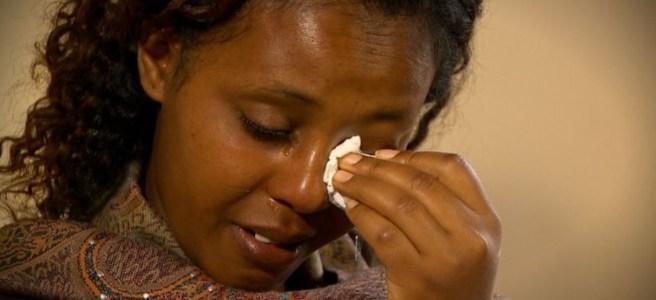
Born in Sudan, Asima fled violent conflict in her homeland and sought asylum in Britain. Poorly educated, unemployed and vulnerable, she relies on state benefits, which are conditional and inadequate, to survive.At the beginning of October her father had a stroke. Thanks to the kindness of a friend who paid her airfare, Asima visited him in Ethiopia. Upon returning to London, she discovered her rent payments had been stopped by the local authority because she’d been abroad longer than the 28-day limit. In fact she was away 30 days, two days over the regulated time.
A Moment of Significance and Opportunity for Ethiopia

Since November 2015 unprecedented protests have been taking place in Ethiopia: angry and frustrated at the widespread abuse of human rights and the centralization of power in the hands of the Tigrayan People's Liberation Front (TPLF) tens of thousands have taken to the streets. The ruling party’s response to this democratic outpouring has been consistently violent; hundreds have been killed and beaten by security forces, tens of thousands arrested and imprisoned.
Ending Pollution Requires a Major Change in Attitudes
Pollution has become an everyday affair; a murderous way of life which, according to a report published in The Lancet, is responsible for the deaths of at least nine million people every year. The air we breathe is poisoned, the streams, rivers, lakes and oceans are filthy, — some more, some less — the land littered with waste, the soil toxic. Neglect, complacency and exploitation characterize the attitude of governments, corporations and far too many individuals towards the life of the planet, and its rich interwoven ecological systems.
Seeking Happiness Beyond Neo-Liberal Consumerism

Irrespective of nationality, religion, race, or gender; whether stinking rich, desperately poor, or somewhere in between, happiness is the one thing everyone is seeking – consciously or not.
The architects of the socio-economic system in which we live have devised a system that promises to satisfy this yearning. But instead of building a society at ease with itself, full of peaceful, happy people, collective discontent is fed, resulting in a range of mental health issues and in some cases suicide.
European Parliament Conference Speech: Women and gender violence in Ethiopia
Good morning everyone. Thank you for inviting me to take part in this important conference on women and gender violence in Ethiopia.
I’d like to begin by outlining the human rights situation in Ethiopia, sketch in the place of women within the society and then relate a story about state violence against a particular woman, a story that is representative of many.
Wasted Lives: The Worldwide Tragedy of Youth Suicide
The pressures of modern life are colossal; for young people — those under 25 years of age — they are perhaps greater than at any other time. Competition in virtually every aspect of contemporary life, a culture obsessed with image and material success, and the ever-increasing cost of living are creating a cocktail of anxiety and self-doubt that drives some people to take their own lives and many more to self-abuse of one kind or another.
Ethiopia’s Economic Growth Hides Fear and Oppression in the One-Party State
Scan the mainstream media for news about Ethiopia and discover headline after headline describing the country’s economic successes: double-digit economic growth, foreign investment and aspirations to become a middle-income country by 2030. Ethiopia, we are told, is a functioning democracy, an African tiger economy and an important ally of Western governments
From Pseudo-Democracy to Real Participation
Imagine a country run along truly democratic lines. In such a mythical land, what would be the role of the politician, and the nature of his or her relationship with that amorphous group paraded under the banner: ‘the people’?We in pseudo-democratic countries hear a lot about politicians serving and honouring the ‘will of the people’ – in Britain this nauseating slogan of appeasement has been repeated ad infinitum since the disastrous European referendum vote – but from where does the supposed conviction of the masses arise?
 graham peebles